- Study
- Student
- Research
- About UNAK
- University
- Schools & faculties
- Governance
- Rector
- Rector’s Office
- University Council
- University Assembly
- University Office
- Laws and regulations
- Organization
- Code of Ethics
- Councils and committees
- Strategies & policies
- On campus
- Human resource
3. June 2021
Chocoholic & Devoted Fan of Iceland Flora
Brynhildur Bjarnadóttir is the Scientist of the Month
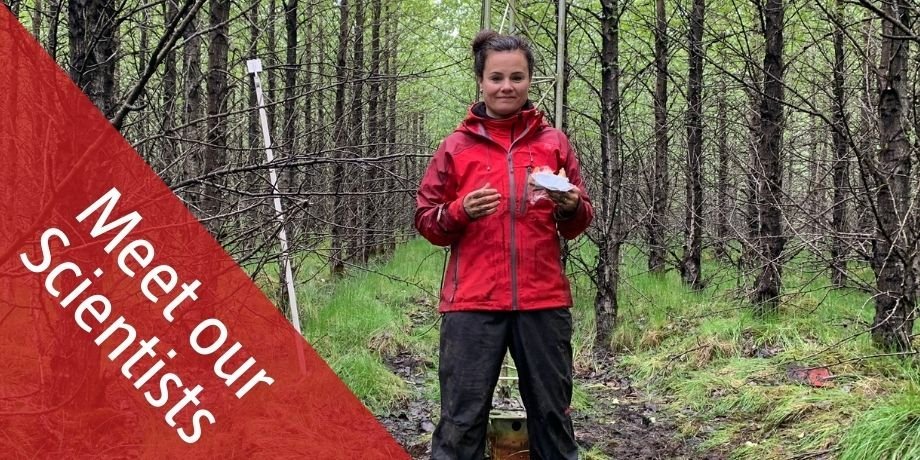
Brynhildur Bjarnadóttir is an associate professor in the Faculty of Education at the University of Akureyri. Her research centers on the natural sciences in a broad sense. She has studied both forest ecosystems and how to best approach teaching the natural sciences within the school system.
The Many Roles that Forests Play
The scope of Brynhildur’s research is rather wide with a keen interest on anything connected with nature and the environment. That said, she has conducted research on the carbon cycle of forest ecosystems, which is an understudied field in Iceland as Iceland is not known as a widely forested country. But forests are quite important from a global perspective in the battle against climate change since they represent the Earth’s organisms that are most effective in capturing CO2 from the atmosphere. This is also true of forests in the Nordic region, as it has been proven that the growth of trees in iceland (and the carbon sequestration they offer) is entirely on par with growth found in other countries at similar latitudes. “These forests also play a lot of other different roles besides capturing carbon, like preventing soil erosion, reducing flooding, serving as a habitat for a number of birds and other organisms as well providing shelter and an opportunity for outdoor recreation. Outdoor recreation is growing in popularity for many people nowadays, and here in windy Iceland, forests are a great choice for outdoor recreation and other activities. My research on forests has shown me that afforestation offers a lot of opportunities to make the most of our land, while capturing carbon and creating an ecosystem that is sustainable and attractive for both wildlife and people,” says Brynhildur.
The Path to a More Eco-friendly World Starts in our School System
The courses Brynhildur teaches in the Faculty of Education all center on the natural sciences. Concepts likes sustainably, outdoor education and practical exercises are frequent topics in her courses. “I think the path to a more eco-friendly lifestyle (and, in turn, a more eco-friendly world) really starts in our school system. The earlier we start educating and cultivating an understanding of the environment in our students, the earlier we see individuals emerging from our school system with a strong sense of environmental awareness, who are eager to embrace an eco-friendly lifestyle, which, in turn, has a positive impact on our environment and society,” says Brynhildur, who considers herself quite fortunate to get work with our future teachers. “I feel a great deal of responsibility when I think about all the provisions that I want them to take away from university for their journeys into preschool, primary and secondary school education. I believe it’s crucial that our future teachers are ecoliterate, that they are familiar with their natural surroundings and model good behaviors for their students when it comes to environmental stewardship,” adds Brynhildur.
A Little Book about the Earthworm
These days Brynhildur is involved in several projects, as always, since her work has broad application. Course assessments and grading is always quite time intensive in the spring. In addition, Brynhildur is also working through data she has collected on how the albedo (i.e., measuring the reflection of solar radiation) shifts when unforested land is changed into forested land. She is also working on putting out a little book about the earthworm — “This little, slimy organism that plays an incredibly important role in the soil cycle, a role that people know little about and don’t always appreciate enough,” says Brynhildur.
Where is Brynhildur from?
Brynhildur Bjarnadóttir was born and raised at Möðruvellir in Hörgárdalur in 1974. She completed her upper secondary degree from Akureyri Junior College in 1994. She then attended the University of Iceland where she received her BS in biology in 1997. In 1999 Brynhildur completed her degree in education and pedagogy from the same institution. Brynhildur holds a Ph.D. in ecophysiology from the University of Lund. Her doctoral thesis explores carbon sequestration in a young larch forest in the Fjlótsdalhérað district of Iceland and revealed that a high level of carbon sequestration occured in a young, developing forest during the growth period. There was also a rapid accumulation of carbon in the soil of the forest with environmental factors like spring freezes making a significant impact on the forest’s capacity for carbon sequestration. These conclusions clearly demonstrated that nature requires a certain balance is required to allow all its complicated cycles to carry on harmoniously. Shifts in weather patterns (climate change) may actually usher in very serious consequences for these critical cycles.