- Study
- Student
- Research
- About UNAK
- University
- Schools & faculties
- Governance
- Rector
- University Council
- University Assembly
- Laws and regulations
- Organization
- Code of Ethics
- Councils and committees
- Strategies & policies
- On campus
- Human resource
2. June 2026
Joining Forces in Environmental Research
Collaboration between the UNAK and the University of Iceland’s Research Centre in Þingeyjarsveit is creating new opportunities for teaching and research in environmental studies
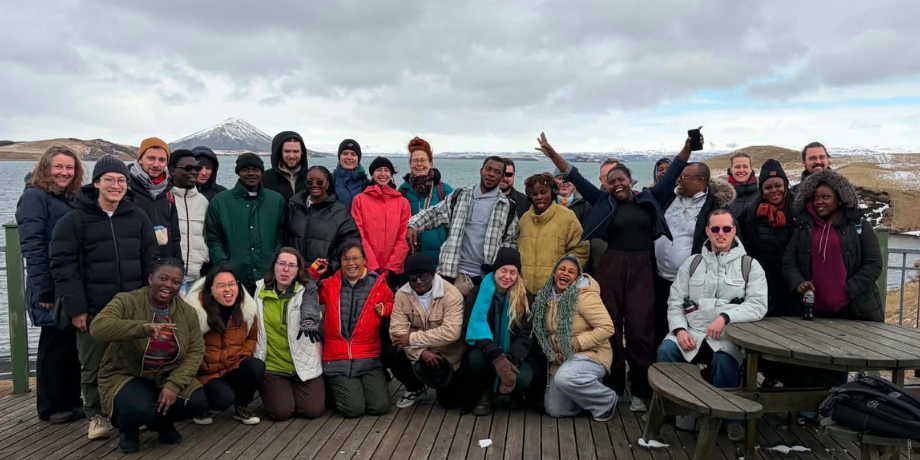
The natural environment, culture and research activities of the Þingeyjarsveit region played a central role in a field excursion to Lake Mývatn undertaken by thirty international master's students in Polar Law on 8 May. The visit formed part of an interdisciplinary collaboration between the University of Akureyri’s Polar Law Programme and the University of Iceland’s Research Centre in Þingeyjarsveit, aimed at strengthening educational cooperation and developing joint environmental research initiatives.
“As Polar Law is highly interdisciplinary, there is an increasing emphasis on learning from one another across different academic fields,” says Antje Neumann, Director of the Polar Law Programme at the University of Akureyri.
The students were completing their first year of studies, and the excursion formed part of a course on Environmental Law and Biodiversity. Representing fifteen countries, including Sweden, Canada, Nigeria, Estonia, Germany, France, the United States, China, Japan and Kenya, the group brought together a wide range of academic backgrounds, including law, natural and social sciences, international relations, philosophy, tourism, business and public administration.
Exploring Nature, Culture and Protected Area Management
The purpose of the visit was to introduce students to environmental humanities research conducted at the research centre and to provide insight into the management of Vatnajökull National Park and the protected areas around Lake Mývatn and the River Laxá. Students attended presentations on the legal framework governing protected areas in Iceland and explored the connections between nature, culture and the arts.
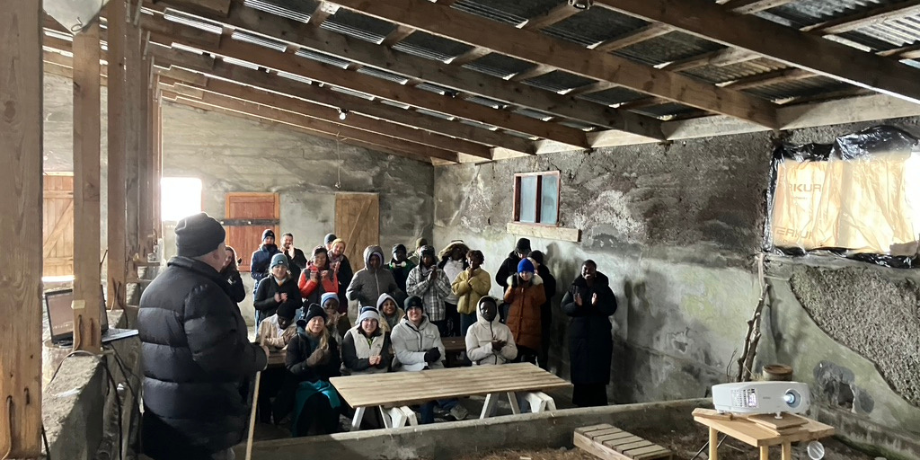
The group toured the newly established exhibition at Gígur and joined a guided educational walk with a ranger from Vatnajökull National Park, experiencing the local environment firsthand despite snowy weather and cold spring conditions. They also visited the archaeological site of Hofstaðir in Mývatnssveit, where Unnsteinn Ingason introduced them to the site's history, significant discoveries and enduring mysteries.
“Environmental law comes alive when you see how nature, culture and communities are interconnected within these unique landscapes,” said students Anika Mueller and Bernhard Pellascio following the excursion.
A Partnership Looking Ahead
The collaboration between the University of Akureyri and the University of Iceland’s Research Centre in Þingeyjarsveit began last year, when lecturers from the Polar Law Programme and the Faculty of Natural Resource Sciences participated in teaching activities for University of Iceland students in environmental humanities. Looking ahead, the partnership will expand beyond teaching to include interdisciplinary environmental research initiatives.
“For our newly established environmental humanities research centre, this collaboration with specialists in Polar Law and the Faculty of Natural Resource Sciences at the University of Akureyri is invaluable,” says Auður Aðalsteinsdóttir, Director of the University of Iceland’s Research Centre in Þingeyjarsveit. “As the international students from UNAK experienced during their visit, there is much to learn by connecting these fields of study with the unique nature, research environment and cultural heritage found around Lake Mývatn and throughout Northeast Iceland.”