- Study
- Student
- Research
- About UNAK
- University
- Schools & faculties
- Governance
- Rector
- University Council
- University Assembly
- Laws and regulations
- Organization
- Councils and committees
- Strategies & policies
- On campus
- Human resource
19. December 2025
Sustainable Human Use of the Arctic Marine Environment
Newly funded Nordforsk project
The Stefansson Arctic Institute at University of Akureyri has been awarded research funding as partner in a newly funded Nordforsk project „Sustainable Human Use of the Arctic Marine Environment“ (SustainME) under the NordForsk CALL Sustainable Development of the Arctic. The project is led by the University of Ottawa, Canada, and with Nordic co-lead, Institute of Marine Research, Norway. The total grant sum to the international consortium of 17 partner institutions is 674 Million ISK of which 19 Million ISK is awarded to the Stefansson Arctic Institute. The project period is 5 years, 2025 to 2029.
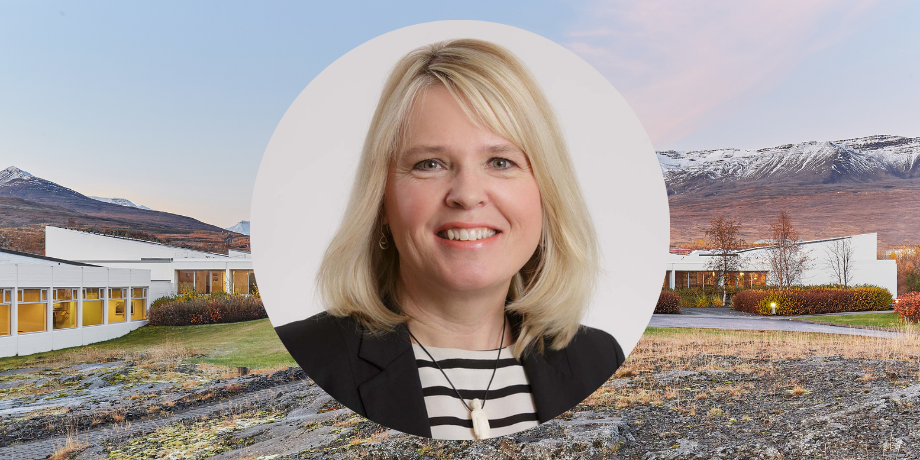
Joan Nymand Larsen, research director at the Stefansson Arctic Institute (SAI), and professor at the Faculty of Social Sciences, University of Akureyri, is the leading researcher from SAI, and together with Jón Haukur Ingimundarson, senior scientist at SAI, Joan will be co-leading the research on food security in the Arctic, including field work in Ilulissat, West Greenland.
The overall aim of the project is to co-produce new knowledge that supports the Sustainable use of the Arctic Marine Environment (SustainME) by identifying and evaluating adaptation solutions that will mitigate the impacts and risks associated with the dual effects of sea ice loss and human use pressures on the Arctic marine environment.
The work on Arctic food security co-led by Joan emphasizes well-being as it relates to mental and physical health, local economic security, secure livelihoods, and food security (subsistence and store-bought). This part of the project will be connecting sea ice and ocean conditions, marine transport, and living marine resources to community well-being and food security.
SAI will be collaborating with partners from University of Ottawa, University of Manitoba, University of Calgary, Toronto Metropolitan University, University of Montreal, Institute of Marine Research, Norwegian Polar Institute, Norwegian Meteorological Institute, UiT Arctic University of Norway, Danish Meteorological Institute, and Finnish Meteorological Institute. Click here for more information.