- Study
- Student
- Research
- About UNAK
- University
- Schools & faculties
- Governance
- Rector
- University Council
- University Assembly
- Laws and regulations
- Organization
- Councils and committees
- Strategies & policies
- On campus
- Human resource
EPiC SAD study
About the project
Prevalence estimates of seasonal affective disorder (SAD) in Iceland from the 90s were comparably low at 3.8%. Prior research suggests that risk factors for SAD are young age, evening chronotype, reduced physical activity, cognitive vulnerabilities, and specific neurophysiological patterns of brain activity. In addition, air pollution was found to induce depression and air pollution undergoes regional and seasonal fluctuations. So far, the interaction of these factors has not been examined and air pollution has been ignored. In the EPiC SAD study we started in 2022 by conducting a large survey, starting with N=15000 people living in Iceland from which around 2000 participated to study the current prevalence of SAD.
From these participants, about 200 joined a longitudinal study which is completed in 2025, half of them being vulnerable to seasonal changes, the other half being unaffected. We followed this sample 4 times a year with questionnaires and recordings of brain recordings, as well as measurements of air pollution in their home. At each follow-up we conducted an emotional memory task, examined chronotype, cognitive vulnerabilities, nutrition, health-related quality of life, physical activity, sleep quality, daily fluctuations of mood and individual exposure to air pollution. The data is currently used to build a prediction model for early identification of the at-risk population.
This project is funded by the Icelandic Research Fund (appl. Nr. 228739-051/ 2106-0364)
Members
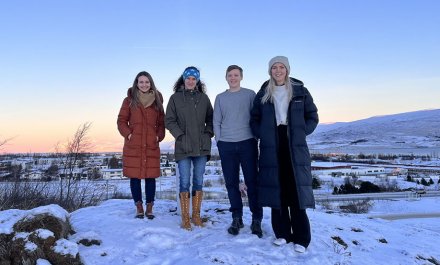
- Yvonne Höller, Professor at the Faculty of Psychology - University of Akureyri
- Lada Zelinski, Doctoral student at the Faculty of Psychology - University of Akureyri
- Ragnar P. Ólafsson, Professor at the Faculty of Psychology - University of Iceland
- Leon Daði Sesseljuson, Masterstudent at the University of Akureyri
- Ásta Guðrún Birgisdóttir, Master graduate from the University of Akureyri
- Ara Dan Pálmadóttir, Research assistant at the University of Akureyri
Students: Angantýr Ómar Ásgeirsson, Angelina Brigitte Carlucci, Anna Kristrún Sigurpálsdóttir, Ara Dan Pálmadóttir, Ásta Guðrún Birgisdóttir, Dagný Theódórsdóttir, Gestur Vagn Baldursson, Harpa Hlin Gunnarsdóttir, Helgi Brynjólfsson, Hilde Björk Didriksen Smith, og Marín Rut Bech Ingadóttir eru nemendur sem munu vinna ritgerðir sínar innan verkefnisins.
Collaborators
- Prof. Laura Astolfi, University La Sapienza, Rome, Italy
- Univ.-Doz. Dr. Arnulf Hartl, Paracelsus Medical University Salzburg, Austria
- Univ.-Prof. Dr. Arne Bathke, Paris Lodron University Salzburg, Austria
- Prof. Dr. Markus Pauly, Technical University of Dortmund, Germany
- PD Dr. rer.nat. Jürgen Fell, University Clinic Bonn, Germany
News
- Höller, Y. (2025, December 10). Árstíðabundið þunglyndi á Íslandi [Seasonal affective disorder in Iceland]. Video lecture. University of Akureyri.
- RÚV. (2025, February 13). Why is Iceland less SAD? RÚV English.
- RÚV. (2025, January 10). Examining what underlies seasonal affective disorder. RÚV.
- Zelinski, L. (2022, October 20). Research on seasonal affective disorder. Akureyri.net.
- Birgisdóttir, Ásta G. (2023, 01. mars). Rannsókn á skammdegisþunglyndi. Austurfrett.is
Publications
- Potthoff, J., Ólafsson, R. P., Zelinski, L., & Höller, Y. (2025). Can self-reported seasonality predict prospectively assessed seasonal changes of self-reported mood, food cravings, body weight, insomnia, and physical activity? Scandinavian Journal of Psychology. Advance online publication.
- Birgisdóttir, Á. G., Zelinski, L., Ólafsson, R. P., & Höller, Y. (2025). Safety threats of seasonal and non-seasonal natural disasters increase disaster anxiety and disaster risk perception. Scandinavian Journal of Psychology. Advance online publication.
- Theódórsdóttir, D., & Höller, Y. (2024). Emotional Bias among Individuals at Risk for Seasonal Affective Disorder—An EEG Study during Remission in Summer. Brain Sciences, 14(1), 2.
- Theódórsdóttir, D., & Höller, Y. (2023). EEG-Correlates of Emotional Memory and Seasonal Symptoms. Applied Sciences, 13(16), 9361.
- Höller, Y., Urbschat, M. M., Kristófersson, G. K., & Ólafsson, R. P. (2022). Predictability of seasonal mood fluctuations based on self-report questionnaires and EEG biomarkers in a non-clinical sample. Frontiers in Psychiatry, 13, 870079.
- Höller, Y., Jónsdóttir, S. T., Hannesdóttir, A. H., & Ólafsson, R. P. (2022). EEG-responses to mood induction interact with seasonality and age. Frontiers in Psychiatry, 13, 950328.
- Zelinski L, Pálmadóttir AD, Birgisdóttir ÁG, Sesseljuson LD, Ólafsson RP, Bathke AC, Höller Y. Prevalence of seasonal affective disorder and seasonality of mood and behaviour in Iceland - Methodological implications for revisiting the latitude hypothesis. J Affect Disord. 2026 Apr 1;398:121057.
Final Theses
- Sigurpálsdóttir, A. K. (2023). Air pollution and mental health: The relation between particulate matter, seasonality and depression [Bachelor’s thesis, University of Akureyri]. Skemman.
- Ásgeirsson, A. Ó., & Baldursson, G. V. (2023). The relation between shift work and seasonality in Iceland: Do shift workers and fishermen report more seasonality than daytime workers? [Bachelor’s thesis, University of Akureyri]. Skemman.
- Wone, S. A. (2024). Is EEG frontal alpha asymmetry associated with habitual characteristics of negative thinking and rumination? [Bachelor’s thesis, University of Iceland]. Skemman.
- Jónsdóttir, B. S. (2024). Seasonal affective disorder and emotional memory: Is there a negativity bias in emotional individuals at risk of seasonal affective disorder? [Bachelor’s thesis, University of Akureyri]. Skemman. https://hdl.handle.net/1946/47892
- Gunnarsdóttir, H. H. (2024). Predictability of seasonal mood fluctuations based on perceptions of weather conditions among residents in Iceland: The relationship between perceptions of weather conditions and seasonality [Bachelor’s thesis, University of Akureyri]. Skemman.
- Carlucci, A. B. (2024). The relationship between seasonality of mood, physical symptoms and physical activity in Iceland [Bachelor’s thesis, University of Akureyri]. Skemman.
- Ingadóttir, M. R. B. (2024). Seasonality and rumination: Do ruminative tendencies change over the seasons in individuals at risk of seasonal affective disorder? [Bachelor’s thesis, University of Akureyri]. Skemman.
- Líndal, Í. Þ. Í., & Magnúsdóttir, M. (2024). Perception of energy, fatigue and sleep between seasons in people at risk of seasonal affective disorder [Bachelor’s thesis, University of Akureyri]. Skemman.
- Eggertsdóttir, Þ. E. (2024). Air pollution and insomnia: The relationship between particulate matter and insomnia, a longitudinal study based in Iceland [Bachelor’s thesis, University of Akureyri]. Skemman.
- Theódórsdóttir, D. (2024). Emotional bias among individuals at risk for seasonal affective disorder: An EEG study during remission in summer [Master’s thesis, University of Akureyri]. Skemman.
- Friðriksdóttir, S. R. (2024). Mood fluctuations and seasonal affective disorder: Are there daily fluctuations of positive and negative mood in individuals at risk of seasonal affective disorder? [Bachelor’s thesis, University of Akureyri]. Skemman.