- Study
- Student
- Research
- About UNAK
- University
- Schools & faculties
- Governance
- Rector
- University Council
- University Assembly
- Laws and regulations
- Organization
- Councils and committees
- Strategies & policies
- On campus
- Human resource
Policing and Society Conference
30. September - 1. October
For the 9th time, the Policing and Society Conference takes place at UNAK — the theme of this year's conference is Youth Crime
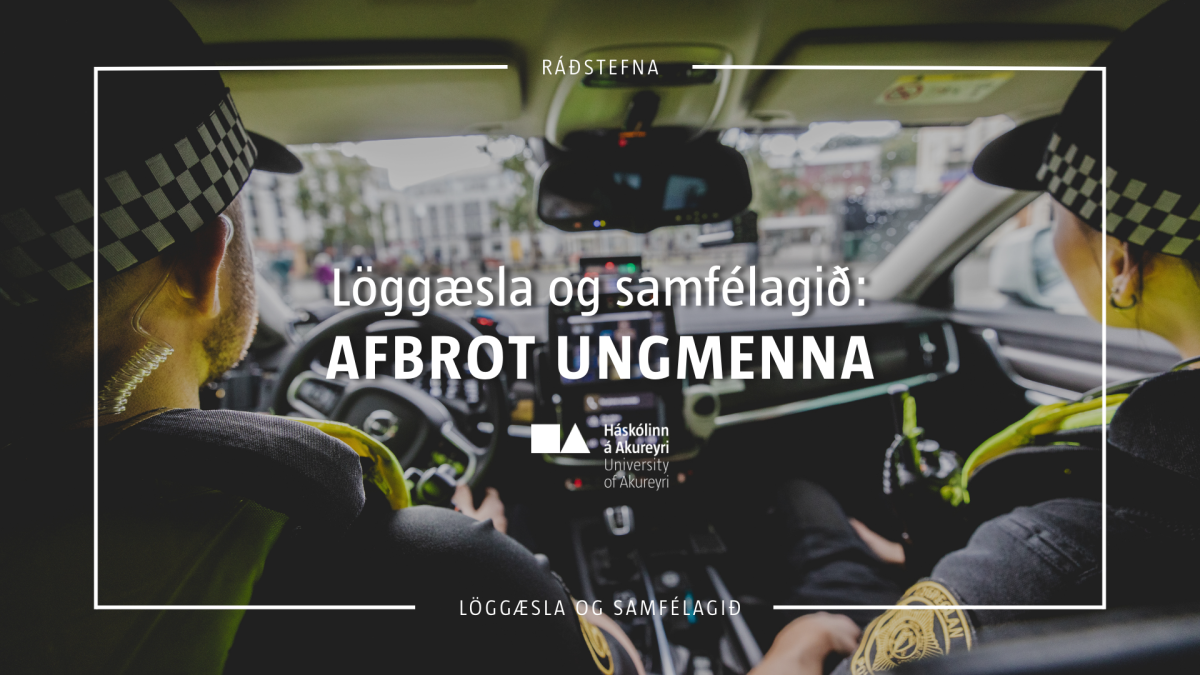
The Policing and Society Conference is a venue where Icelandic and international academics and professionals meet and converse about policing in a broad sense. This year’s conference theme is Youth Crime.
Programme
Wednesday 30 September - Morning
8:15-
Registeration and collection of conference materials. UNAK students do not need to register
9:00
OPENING: Helgi Gunnlaugsson, Háskóli Íslands (N101)
9:10 - 9:50
KEYNOTE ADDRESS: Youth Crime Across the Nordic Region: Current Challenges and Prevention Approaches - Markus Kaakinen, Háskólinn í Helsinki (N101)
10:00-10:25
- Frá unglingabrotum til fullorðinsferils: Ferilgreining á ungmennum í málaskrá lögreglu 2010–2025 - Snorri Örn Árnason, Embætti ríkislögreglustjóra og Háskóli Íslands (N101)
- Marginalization and Youth Gang Involvement in Iceland: A Multilevel Analysis Using ISRD4 - Margrét Valdimarsdóttir, Háskóli Íslands (M101)
- Netöfgasamfélög: „Ég veit ég er fórnarlamb en ég bara get ekki hætt að tala við hann!“ - Símon Geir Geirsson, Lögreglan á höfuðborgarsvæðinu (N102)
- The Ethical Conduct of Research among Police: Consent, Confidentiality, and Coercion Through the Eyes of Officers in the United States - Brandon del Pozo, Brown háskóli og Jennifer J. Carroll, Ríkisháskólinn í Norður Karólínu (M102)
10:25-10:50
- Börn sem týnast: Fyrri lögreglusaga og afbrot síðar á ævinni - Melkorka Hákonardóttir, Háskólinn á Akureyri og Malmö háskóli (N101)
- Exit programmes and organized crime disengagement in the Baltic Sea Region: preliminary empirical insights - Tony Mickelsson Blomqvist, Södertörn háskóli (M101)
- Afbrot ungmenna með aðstoð internetsins. Hvaða þróun hefur lögreglan verið að sjá? - Eiríkur Guðni Ásgeirsson, Lögreglan á Suðurnesjum (N102)
- Into the Bermuda Triangle: How the police lose knowledge and why it matters - Stephanos Anastasiadis, Lögregluskólinn í Neðra-Saxland, Jens Bergmann, Lögregluskólinn í Neðra-Saxlandi og Jonas Grutzpalk, Háskóli hagnýtra fræða lögreglu og opinberrar stjórnsýslu í Norðurrín-Vestfalíu (M102)
11:00-11:25
- Aðgerðaáætlun stjórnvalda vegna ofbeldis meðal og gegn börnum – staða og árangur - Eygló Harðardóttir, Embætti ríkislögreglustjóra (N101)
- Age and Public Support for Police Use of Conducted Energy Weapons in Iceland – Rannveig Þórisdóttir, Embætti ríkislögreglustjóra og Háskóli Íslands (M101)
- Stafræn kynferðisbrot meðal ungra gerenda: Rannsókn á málum lögreglu 2021-2024 - Guðbjörg Bergsdóttir, Embætti ríkislögreglustjóra (N102)
- Professionalization of the Norwegian police: reflections, lessons and concerns - Dorian Schaap, Radboud háskóli í Nijmegen (M102)
11:25-11:50
- Fullorðnir í málum með ungmennum - Birna Friðfinnsdóttir og Jónas Orri Jónasson, Lögreglan á höfuðborgarsvæðinu (N101)
- Police education and the democratic mission of universities - Sigurður Kristinsson, Háskólinn á Akureyri (M101)
- Kynferðislegur lágmarksaldur - Júlí Ósk Antonsdóttir, Háskólinn á Akureyri og Eva Huld Ívarsdóttir, Huld lögmannsstofa (N102)
- Beyond Police Training: The Changing Purposes of Police Education in Iceland - Ólafur Örn Bragason, Mennta- og starfsþróunarsetur lögreglu og Háskólinn á Akureyri og Guðmundur Oddsson, Háskólinn á Akureyri (M102)
12:00-12:45
KEYNOTE ADDRESS: Youth crime and (in)equality in police decision-making: seven spheres of influence – Caroline Lanskey, Cambridge háskóli (N101)
12:45-13:30
LUNCH BREAK: Kaffi Borg, on the second floor of the University, will be open
Wednesday 30 September - Afternoon
13:30-13:55
- Birtingarmyndir og áskoranir tengd hagnýtingu ungmenna í skipulagðri brotastarfsemi - Katrín Sif Oddgeirsdóttir, Embætti ríkislögreglustjóra (N101)
- Criminal Justice Labeling, Causal Attributions, and Stigma Reactions: A Survey-Vignette Study in Iceland - Jón Gunnar Bernburg, Háskóli Íslands (M101)
- Vændiskaup, mansal og neyð – álitamál og lagalegar hugleiðingar - Agnes Björk Blöndal, Lögreglan á Norðurlandi eystra (N102)
- „To care or not to care,“ is not the question: Police middle manager dilemmas around integrating staff with a disability - Maleen Halter, Hannover háskóli og Stephanos Anastasiadis, Lögregluskólinn í Neðra-Saxlandi (M102)
13:55-14:20
- Kallið þið þetta svo refsingu? – Sigríður Hjaltested, Héraðsdómur Reykjavíkur (N101)
- From Policing to Housing Governance: Youth Crime, Family Responsibility and Swedish Tenancy Law - Kristina Borodina, Háskólinn í Uppsölum (M101)
- Hin fullkomna stjórn: Kyrkingartak í heimilisofbeldismálum - Sædís Jana Jónsdóttir og Jónas Orri Jónasson, Lögreglan á höfuðborgarsvæðinu (N102)
- Mapping the Spatio-Sexual Contract: Predatory Space in a Toronto Nightclub - Melina Elefteriadis, Toronto háskóli (M102)
14:20-14:55
- Ungir gerendur og refsivarsla – Birgir Jónasson, Lögreglan á Norðurlandi vestra og Háskólinn á Akureyri (N101)
- How do Pupil Referral Units work in partnership with mainstream educational settings to help prevent offending and support positive citizenship? - Paige Carnall, De Montfort háskóli (M101)
- Vilja Íslendingar refsa fyrir kaup á kynlífstengdri þjónustu og vörslu fíkniefna til eigin nota? - Helgi Gunnlaugsson, Háskóli Íslands og Jónas Orri Jónasson, Lögreglan á höfuðborgarsvæðinu (N102)
- Mapping Cyber-Enabled Sexual Offences: Digital Evidence, Uneven Investigative Outcomes and Adolescent Relationships in Poland - Piotr Maciej Lewulis, Háskólinn í Varsjá (M102)
15:10-15:35
- Ungir afbrotamenn í fullnustukerfinu - endurhæfing og samfella í þjónustu - Karen Dröfn Hafþórsdóttir og Böðvar Einarsson, Fangelsismálastofnun (N101)
- Staying with the Case, but Not for Too Long: Persistence and Its Limits in Cold Case Investigation - Paweł Waszkiewicz, Háskólinn í Varsjá (M101)
- Við erum öll samfélagslöggur: hvernig náum við til ungmenna? - Unnar Þór Bjarnason, Lögreglan á höfuðborgarsvæðinu (N102)
- Digital Sexual Violence and Icelandic Court Practice: Five Years under Article 199a of the General Penal Code - Hildur Fjóla Antonsdóttir, Háskólinn á Akureyri (M102)
15:35-16:00
- Farsæld barna – nálgun LRH - Þóra Jónasdóttir og Marta Kristín Hreiðarsdóttir, Lögreglan á höfuðborgarsvæðinu (N101)
- The policing power: a brief history of panopticon surveillance on campus in the United States - Rongyou Gao, Emory háskóli (M101)
- Árangur af samfélagslöggæslu? Reynsla á Norðurlandi eystra - Halldór Tumi Ólason, Lögreglan á Norðurlandi eystra (N102)
- Að viðhalda öflugum teymum: að virkja jákvæða þætti lögreglumenningar gegn áreitni í lögreglunni - Finnborg S. Steinþórsdóttir og Gyða M. Pétursdóttir, Háskóli Íslands (M102)
16:00-16:25
- Farsæld barna – Rannsóknir í málefnum barna hjá Lögreglunni á höfuðborgarsvæðinu - Emilía Ýr Jónsdóttir og Guðrún Ýr Skúladóttir, Lögreglan á höfuðborgarsvæðinu (N101)
- „Þetta helst mikið í hendur“ - frávikshegðun barna og ungmenna og uppeldisaðstæður - Ármann Örn Sigursteinsson, Háskólinn á Akureyri (N102)
- Að valdefla varðstjóra til að bregðast við kynferðislegri áreitni innan lögreglunnar: Tækifæri og hindranir gagnvirkrar þjálfunar - Laufey Axelsdóttir, Finnborg S. Steinþórsdóttir og Gyða M. Pétursdóttir, Háskóli Íslands (M102)
16:30-19:00
Happy Hour at Berjaya Hotel
19:00-
Conference dinner at Aurora Restaurant, Berjaya Hotel
Thursday 1 October
10:00-10:25
- Púlsinn - bráða- og viðbragðsteymi vegna ofbeldis og hótana meðal barna á aldrinum 10-18 ára - Andrea Marel Þorsteinsdóttir, Púlsinn bráða- og viðbragðsteymi (N101)
- From Research Findings to a New Approach in Police Training - Hjörtur Hjartarson, Lögreglan á Suðurnesjum (M101)
- Að skrúfa fyrir eldhúskranann meðan flæðir upp úr baðkarinu: Áhrif miðla á áhættuhegðun ungmenna í víðu samhengi - Guðbjörg Hildur Kolbeins, Háskólinn á Akureyri (N102)
- Breyta í Event(ual) tactics of Queer Refugees in police encounters - Árdís Kár Ingvars, Háskólinn á Akureyri (M102)
10:25-10:50
- Ungir sakborningar og gæði skýrslutöku: Méndez-viðmiðin, íslensk framkvæmd og hagnýt ráð fyrir lögreglu - Ólafur Örn Bragason, Mennta- og starfsþróunarsetur lögreglu og Háskólinn á Akureyri (N101)
- „You could end up as one of the suspects“: Experiences and perceptions of Black male immigrants of citizen-initiated police contact in Iceland - Eyrún Eyþórsdóttir, Háskólinn á Akureyri (M101)
- „Þetta er ekki bara árás á mig og mína fjölskyldu, heldur er þetta líka árás á lögregluna og ríkið allt“ - Þórhildur Vala Kjartansdóttir, Lögreglan á Norðurlandi vestra og Háskóli Íslands (N102)
- Racial Platform Capitalism and Far-Right Hate: Working in Tandem to Increase Precarities of Racialized Male Gig Drivers - Reena Kukreja, Queen’s háskóli (M102)
11:05-11:30
- Afstaða íslenskra ungmenna til afbrota og refsinga: „Ég held að dómstólar á Íslandi myndu örugglega ekki gera neitt, því það er bara oftast þannig“ - Hekla Steinarsdóttir og Helgi Gunnlaugsson, Háskóli Íslands (N101)
- Illuminating the Experiences of Individuals with Autism Spectrum Condition in Custody and the Challenges Faced by Police Officers: Toward Squaring the Circle - Laura Naegler og Gabe Mythen, Háskólinn í Liverpool (M101)
- Landhelgisgæslan og samfélagið: Hvernig styrkjum við traust milli löggæslu og samfélags? - Klara Bjartmarz og Auðunn Kristinsson, Landhelgisgæsla Íslands (N102)
- Beyond Punishment: Skills, Jobs, and Community as Pathways Out of Youth - Adejare Somorin, International Initiative for Peace (M102)
11:30-11:55
- Beyond Offender or Victim: A Harm-Informed Framework for Policing Youth Crime - Andrew Paul Hill, Háskólinn á Akureyri
(M101) - Professionlization and Police-Academic Relations in Iceland - Guðmundur Oddsson, Háskólinn á Akureyri, Ólafur Örn Bragason, Mennta- og starfsþróunarsetur lögreglu og Háskólinn á Akureyri og Rannveig Þórisdóttir, Embætti ríkislögreglustjóra og Háskóli Íslands (N102)
- Gender Differences in the Social Representations of Drug Use among Secondary School Students: A Prototypical Analysis - Mohamed Ridha Bouguedoura og Nabil Azi, Mouloud Mammeri háskóli (M102)
12:00-12:05
CLOSING REMARKS: Guðmundur Oddsson, Háskólinn á Akureyri (N101)
Keynote Speakers
Caroline Lanskey

Caroline Lanskey is an Associate Professor in Criminology and Criminal Justice at the University of Cambridge Institute of Criminology and Director of its Justice and Society Research Centre. Her research draws on her interdisciplinary expertise in criminology, education (sociology and philosophy) and language, and explores the human and social dimensions of criminal justice involvement with a particular focus on processes of marginalisation and inclusion. With expertise in qualitative and quantitative methodologies she has led and co-led numerous research projects with young people in or at risk of involvement in the justice system. Her recent work has taken a comparative look at equality in youth justice decision-making processes including the role of the police, and intersections with other agencies working in youth justice and in interlocking systems such as welfare and education.
Markus Kaakinen

Markus Kaakinen is an Associate Professor of Criminal Policy at the Institute of Criminology and Legal Policy, University of Helsinki. His research focuses on youth crime, risk behaviour, and crime prevention. He has published extensively and led multiple research projects within these areas.
Registeration
The conference registration fee is €70 per person, and the program, coffee, and refreshments are included. University students attend free of charge. Conference attendees pay for their own travel and accommodation.
Call for abstracts
The Police Science Research Center at the University of Akureyri (Iceland) invites abstracts for its 9th Policing and Society Conference on September 30 and October 1, 2026. The conference is a venue where Icelandic and international academics and professionals meet and converse about policing in a broad sense. Professionals and academics who work in fields that involve policing in one form or another are encouraged to submit abstracts that build on their work and/or research.
The keynote speakers reflect this year’s conference theme: Youth Crime. Crime rates increase rapidly during adolescence and typically peak in the late teenage years or early twenties. Understanding the nature and extent of youth crime, as well as its key drivers, is essential for developing effective responses and preventing further offending. Keynote speakers will be announced later.
We strongly encourage abstracts that deal with youth crime, but we, of course, welcome all contributions that intersect with policing in one form or another. To reiterate: this conference is a joint venue for academics and professionals to share their research and experience involving policing, learn from one another, and engage with the public.
abstracts should be submitted no later than august 15.
Useful Information:
- The conference will be held September 30 and October 1, 2026, in the Miðborg house of the University of Akureyri. The conference runs from 9:00 Wednesday, September 30, to 13:00 Thursday, October 1.
- Each presentation is allotted 25 minutes, which includes Q&A. Abstracts (maximum 250 words) should be submitted via email (goddsson@unak.is) no later than August 15. Abstracts should include a title, short description, methods, main results and/or arguments. Include information about academic position, profession, and the order of the authors (if more than one).
- The conference registration fee is €70 per person, and the program, coffee, and refreshments are included. University students attend free of charge. Conference attendees pay for their own travel and accommodation.
- Several airlines fly to Iceland, including Icelandair www.icelandair.com
- Facebook event
Further Information
For more information contact Guðmundur Oddsson, Professor of Sociology at the University of Akureyri goddsson@unak.is; tel. +354 460 8677