- Study
- Student
- Research
- About UNAK
- University
- Schools & faculties
- Governance
- Rector
- University Council
- University Assembly
- Laws and regulations
- Organization
- Councils and committees
- Strategies & policies
- On campus
- Human resource
5. November 2026
How clearly can you picture a pumpkin?
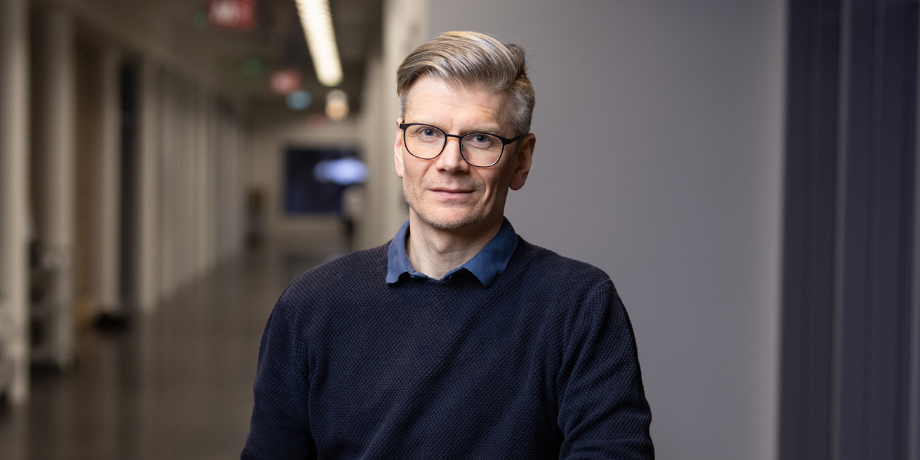
Árni Gunnar Ásgeirsson, Associate Professor at the Faculty of Psychology, is among the authors of a new study exploring how people experience mental imagery
Picture a pumpkin. Is the image sharp and brightly coloured, or faint and blurry? Perhaps no image appears at all.
This inner visual experience varies widely from person to person. Árni Gunnar and his colleagues introduce a new measurement tool, VIVAS, designed to help researchers understand these differences. Their study is published in the scientific journal Cortex.
Alongside Árni Gunnar, the research team includes Heiða María Sigurðardóttir, Professor at the University of Iceland’s Faculty of Psychology, who holds a PhD in neuroscience; Vaka Vésteinsdóttir, Associate Professor at the same faculty; Dagur Árnason, a master’s student in clinical psychology at the University of Iceland; and Marelle Mäekalle, who holds an MSc in psychology from the University of Iceland.
How do you describe something that exists only in your mind?
Traditional questionnaires about mental imagery often rely on words. VIVAS instead provides visual reference points, allowing people to compare their mental images with examples that vary in opacity, sharpness and colour saturation.
The study involved 205 participants from a panel randomly selected from Iceland’s National Registry. They assessed their mental images of subjects including animals, faces, buildings and food.
Food brings stronger colours to mind
The findings suggest that describing mental imagery as simply strong or weak misses part of the picture. A person’s mental images may have vivid colours without equally clear shapes, or vice versa.
What people imagined also mattered. Mental images of food had more vivid colours than those in other categories, while unfamiliar objects produced the weakest imagery across all three dimensions. This suggests that familiarity may play an important role in how vividly we picture things.
The new tool and a traditional mental imagery questionnaire did not always produce similar results for individual participants. Different approaches may therefore reveal different aspects of the images we experience in our minds.
Why does this matter?
A better understanding of mental imagery can lay the groundwork for research into how we learn, remember and process experiences. It may also be relevant to psychological therapies that involve creating or changing mental images. Do these approaches work equally well for everyone, including people who experience little or no visual imagery?
To answer such questions, researchers first need ways to describe and measure these different experiences. VIVAS could support further research into the links between mental imagery, learning, memory and mental health.