- Study
- Student
- Research
- About UNAK
- University
- Schools & faculties
- Governance
- Rector
- University Council
- University Assembly
- Laws and regulations
- Organization
- Councils and committees
- Strategies & policies
- On campus
- Human resource
8. October 2026
Sara Fusco, adjunct at the Faculty of Law, completes doctoral degree at the University of Lapland
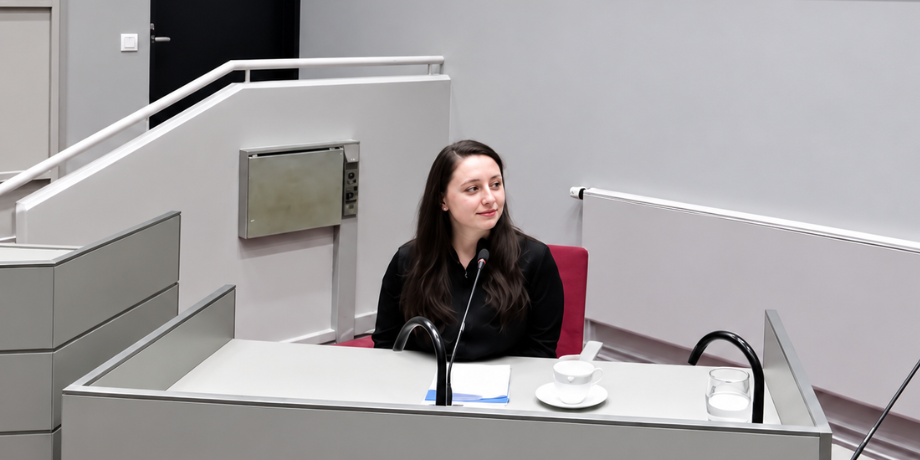
Sara successfully defended her doctoral dissertation at the University of Lapland, Finland, on 25 September 2026.

Her dissertation, Environmental Constitutionalism in the Arctic: Indigenous Rights Recognition Through Environmental Restorative Justice, examines how constitutional law responds to environmental harm affecting Indigenous Peoples in the Arctic through a comparative analysis of Canada, Finland and Norway.
One of the central conclusions of the research is that constitutional recognition of Indigenous rights, while important, is not in itself sufficient to achieve reconciliation. Effective protection also depends on meaningful Indigenous participation, the distribution of decision-making authority, and the ability of environmental governance to recognise cultural, cumulative and intergenerational forms of harm.
Sara develops environmental restorative justice as an analytical framework for examining these questions. The dissertation shows that constitutional law can create important openings by recognising new forms of environmental and cultural harm, strengthening procedural rights and requiring public authorities to justify decisions affecting Indigenous communities. At the same time, courts alone cannot restructure the broader relationships between states, Indigenous institutions and control over land and natural resources.
A Finnish doctoral defence
The public defence took place at the Faculty of Law of the University of Lapland in Rovaniemi and followed the formal traditions of the Finnish doctoral examination.
Professor Dorothée Cambou of the University of Helsinki served as the opponent, while Research Professor Kamrul Hossain of the University of Lapland served as custos and presided over the academic proceedings.

During the defence, Sara presented and discussed the main arguments, methodology and conclusions of the dissertation and responded to questions and critical observations raised by the opponent. The formal examination was followed by the traditional celebrations associated with the completion of a Finnish doctorate.
To mark the occasion, the Faculty of Law of the University of Lapland gifted Sara with a traditional Lapland knife, a kuksa, a traditional wooden cup, and a commemorative plate engraved with her name and the date of the defence. The Arctic Centre and the Northern Institute for Environmental and Minority Law (NIEM) also honoured Sara, who had been affiliated with both institutions for many years.
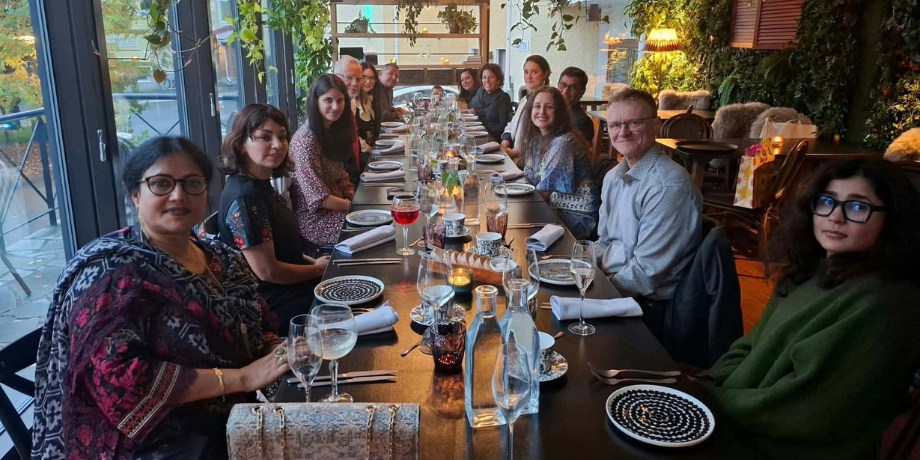
The day concluded with a karonkka, the traditional Finnish celebration held in honour of the opponent after a successful doctoral defence. The dinner brought together supervisors, colleagues, friends and family in Rovaniemi.
From Polar Law student to lecturer
Sara holds a Master’s degree in Comparative Public Law from the University of Florence and an LL.M. in Polar Law from the University of Akureyri. She later began her doctoral research at the University of Lapland alongside with a Postgraduate Diploma in Human Security and Sustainability from the Italian Institute of International Political Sciences.
She is currently an Adjunct Lecturer at the Faculty of Law at the University of Akureyri, where she teaches across several areas of international and comparative law and contributes to the Polar Law programme as teacher and thesis coordinator.
We warmly congratulate Sara on her achievement and on earning her doctoral degree.
Publication
Sara Fusco (2026), Environmental Constitutionalism in the Arctic: Indigenous Rights Recognition Through Environmental Restorative Justice. Acta Electronica Universitatis Lapponiensis 441. University of Lapland. ISBN 978-952-337-564-2.
Permanent electronic publication: https://urn.fi/URN:ISBN:978-952-337-564-2