- Study
- Student
- Research
- About UNAK
- University
- Schools & faculties
- Governance
- Rector
- University Council
- University Assembly
- Laws and regulations
- Organization
- Councils and committees
- Strategies & policies
- On campus
- Human resource
27. October 2026
Strong Participation from Akureyri at the Arctic Circle Assembly
A large delegation of researchers and experts based at the Arctic Centre of Iceland in Akureyri took part in one of the world's largest international forums on Arctic affairs

A large delegation of researchers and experts based in Akureyri participated in the Arctic Circle Assembly, held at Harpa Concert Hall and Conference Centre in Reykjavík from 8 to 10 October. The annual conference is one of the largest international forums dedicated to Arctic affairs, bringing together representatives from government, academia, business, civil society and Indigenous communities across the Arctic.
This year, more than 2,000 participants from around the world gathered at Harpa to discuss Arctic issues across more than 200 sessions and panel discussions.
A Thriving Arctic Knowledge Community in Akureyri
Located on the university campus in Akureyri, the Arctic Centre of Iceland is a dynamic hub for Arctic knowledge and expertise, bringing together Icelandic and international organisations working in research, education, policy development and Arctic cooperation.
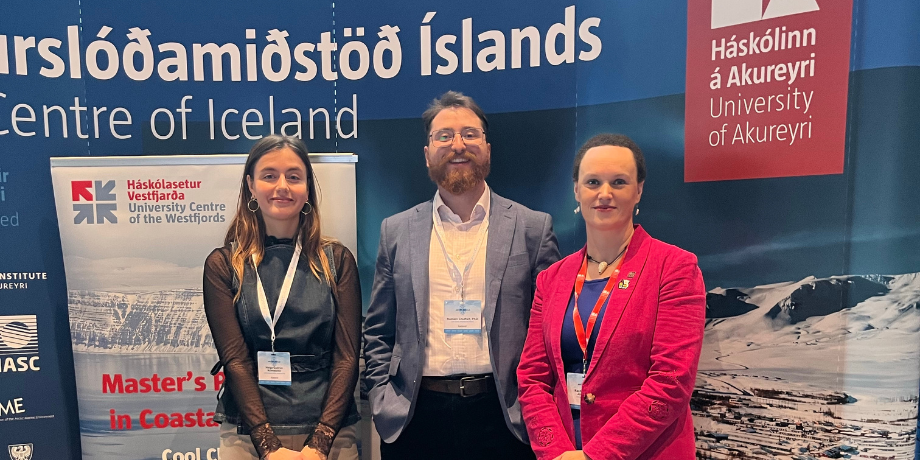
Representatives from the University of Akureyri, the Stefansson Arctic Institute (SAI), the Icelandic Arctic Cooperation Network (IACN), the International Arctic Science Committee (IASC), and the Arctic Council working groups CAFF and PAME contributed to numerous sessions throughout the Assembly. The University of Akureyri, the Icelandic Arctic Cooperation Network and IASC also hosted exhibition stands at the conference.
Arctic challenges require interdisciplinary approaches, and the contributions of researchers and experts from the Arctic Centre reflected the broad range of knowledge and expertise within Akureyri's academic and research community.
Topics ranged from climate change, biodiversity, glacier melt, oceanography and shipping to international geopolitical tensions, economic and social inequality, gender equality, tourism, scientific careers and preparations for the Fifth International Polar Year.
From Ocean Circulation to Arctic Biodiversity
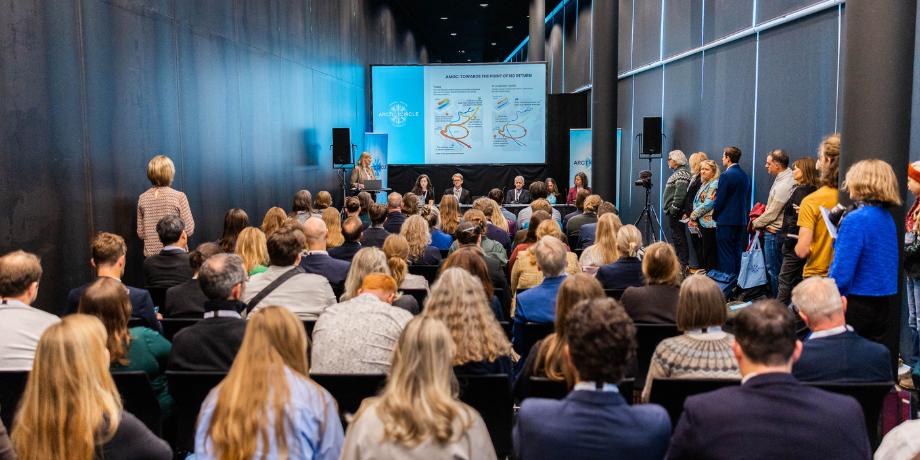
Among the many contributions was a presentation by Steingrímur Jónsson, Professor at the University of Akureyri, on the Atlantic Meridional Overturning Circulation (AMOC). The session was organised by the Ministries of Foreign Affairs of Iceland, the Netherlands and the United Kingdom.
AMOC was one of the key topics at this year's Assembly, with recent scientific research suggesting an increased likelihood of a substantial weakening of the circulation system. Such a development could have particularly significant consequences for Iceland.
In his presentation, Steingrímur explored the potential impacts on Iceland and emphasised the importance of coordinated international measurements and monitoring. Above all, he highlighted the urgent need to reduce greenhouse gas emissions. He also called for greater educational opportunities in oceanography in Iceland.
Tom Barry, Dean of the School of Humanities and Social Sciences at the University of Akureyri, participated in a session focusing on the upcoming Arctic Biodiversity Summit, which will take place in Nuuk, Greenland, next spring.
The Summit forms part of the programme for the Kingdom of Denmark's Chairship of the Arctic Council, involving Greenland, the Faroe Islands and Denmark. Tom is currently working with numerous international partners to prepare for this important event.
Inequality, Shipping Routes and International Law
Joan Nymand Larsen, Research Director at the Stefansson Arctic Institute and Professor at the University of Akureyri, delivered a presentation during the session An Unequal Arctic: Economic Development, Wealth & Inequality, organised as part of the WAGE research collaboration.
Joan leads a case study within the WAGE project examining social and economic inequality in South Greenland. The session was organised by Université Laval in Canada, which leads the international WAGE research team. The Stefansson Arctic Institute is one of the project's partners.
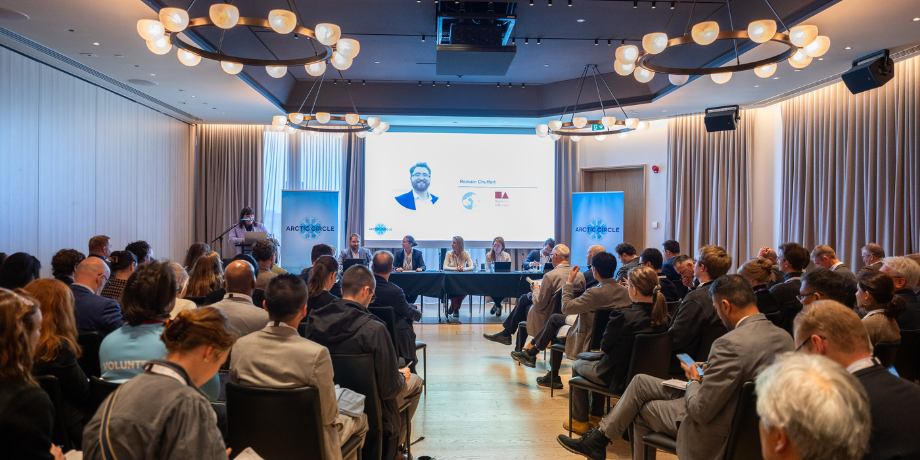
Romain Chuffart, a researcher at the Stefansson Arctic Institute and Nansen Professor at the University of Akureyri, addressed the Northern Sea Route (NSR) from an international law perspective in the session Northern Sea Route: Between Limited Use & Power Politics.
The shipping route, which runs along Russia's northern coastline, has attracted growing attention amid declining sea ice and increasing geopolitical tensions.
Sara Fusco, Adjunct Lecturer at the Faculty of Law, who recently completed her PhD at the University of Lapland, delivered a presentation in the session Net Zero or Zero Trust: Climate Breakdown, Fear, Cooperation.
Sara also participated in a roundtable discussion exploring Arctic issues from the perspectives of different generations.
Strengthening International Connections Beyond the Conference Sessions
The Arctic Circle Assembly is about much more than presentations and panel discussions. It also provides an invaluable opportunity to reconnect with colleagues, friends and partners from around the world, strengthen existing relationships and establish new collaborations.

Alongside the formal programme at Harpa, numerous side events, meetings and receptions took place throughout the Assembly.
Representatives from the University of Akureyri attended an Arctic Council reception celebrating 30 years of cooperation, with music and refreshments marking the occasion. They also visited an icebreaker docked in Reykjavík's Old Harbour and visited the Greenlandic Representation in Iceland.
The Assembly concluded with a reception hosted by the Governor of Alaska, featuring a performance by Pamyua, a musical group whose members are of Yup'ik Indigenous heritage from Alaska.
The strong participation of researchers and experts from Akureyri at the Arctic Circle Assembly highlights the importance of the thriving Arctic knowledge community based on the university campus and its contribution to international dialogue, research and cooperation on the future of the Arctic.