- Study
- Student
- Research
- About UNAK
- University
- Schools & faculties
- Governance
- Rector
- University Council
- University Assembly
- Laws and regulations
- Organization
- Councils and committees
- Strategies & policies
- On campus
- Human resource
17. September 2026
West Nordic Council parliamentarians explore Arctic activities in Akureyri
Arctic activities in Akureyri were at the heart of the visit
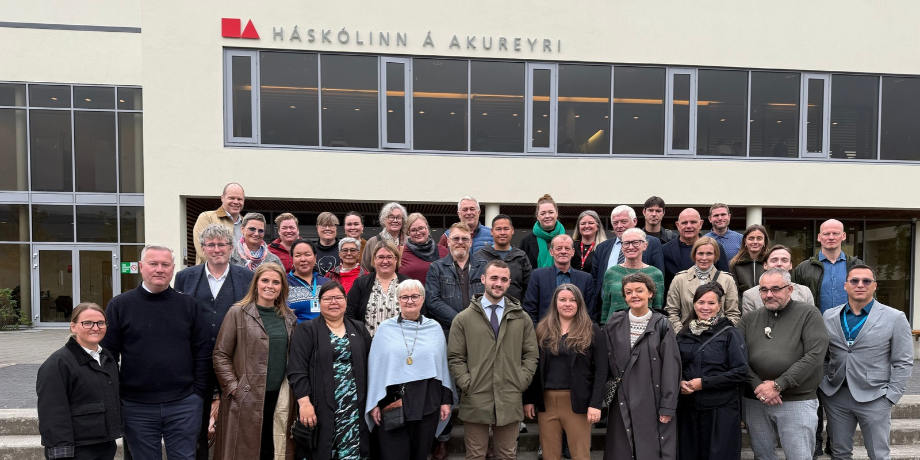
AOn Thursday 3 September, parliamentarians from the West Nordic Council visited the University of Akureyri (UNAK) to learn about the diverse range of Arctic research, projects and activities taking place on the University campus.
The West Nordic Council is a parliamentary cooperation forum for the national parliaments of the Faroe Islands, Greenland and Iceland. The visit took place in connection with the Council’s annual meeting, held in Akureyri from 1–3 September.
The visit was organised by partners within Iceland’s Arctic Centre, a strong knowledge community based on the University campus in Akureyri. The Centre brings together the University of Akureyri, the Stefansson Arctic Institute at UNAK (SAI), the Icelandic Tourism Research Centre (RMF), the Icelandic Arctic Cooperation Network (IACN), the International Arctic Science Committee (IASC), and the Arctic Council Working Groups Conservation of Arctic Flora and Fauna (CAFF) and Protection of the Arctic Marine Environment (PAME).
Representatives from these organisations welcomed the West Nordic Council parliamentarians and introduced them to the Centre’s wide-ranging work in Arctic research, knowledge exchange, policymaking and international cooperation.
A strong Arctic knowledge community
Iceland’s Arctic Policy defines Akureyri as a centre of Icelandic and international knowledge and expertise on Arctic issues.
The University campus is home to a strong interdisciplinary knowledge community, bringing together a diverse range of institutions and organisations working in Arctic research, education, policymaking and collaboration. Akureyri is one of the Arctic Council’s largest centres of activity, and numerous circumpolar monitoring and assessment programmes and initiatives are coordinated by institutions based in Akureyri.
Further information about Arctic activities in Akureyri can be found here.
Shared challenges and international cooperation
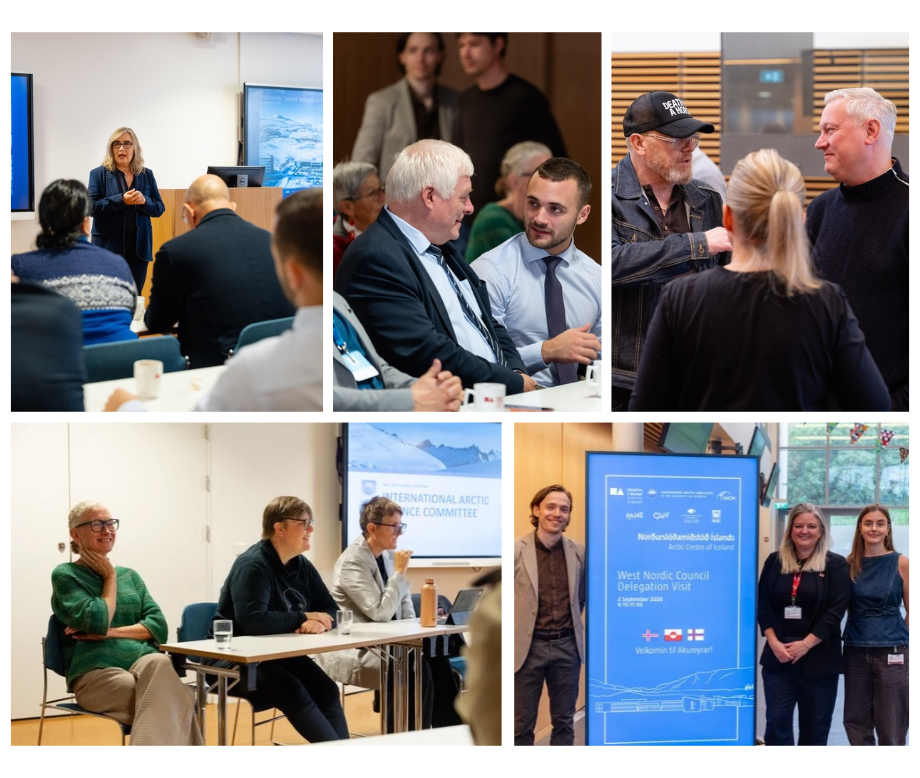
The parliamentarians were introduced to the role of Iceland’s Arctic Centre and the many Arctic-related projects and programmes in which its partners participate.
Topics discussed included international scientific cooperation in the Arctic, the changing landscape of international collaboration, biodiversity monitoring and conservation, the impacts of climate change, sustainable resource management, increasing shipping activity in the Arctic, the protection of marine and coastal environments, and the societal impacts of growing tourism.
West Nordic cooperation in focus
Much of the research conducted on the University campus addresses issues of shared importance to Iceland, the Faroe Islands and Greenland. A significant part of this work is also carried out through international cooperation in which the three countries participate in various ways.
This broader context of West Nordic cooperation was a central theme of the visit and provided a platform for lively discussions between the parliamentarians and experts from Iceland’s Arctic Centre.