- Study
- Student
- Research
- About UNAK
- University
- Schools & faculties
- Governance
- Rector
- Rector’s Office
- University Council
- University Assembly
- University Office
- Laws and regulations
- Organization
- Code of Ethics
- Councils and committees
- Strategies & policies
- On campus
- Human resource
15. August 2025
What dictates Vaccination Behavior?
Clear Discrepancy in Vaccination Behavior Between Immigrants and Icelanders During COVID-19
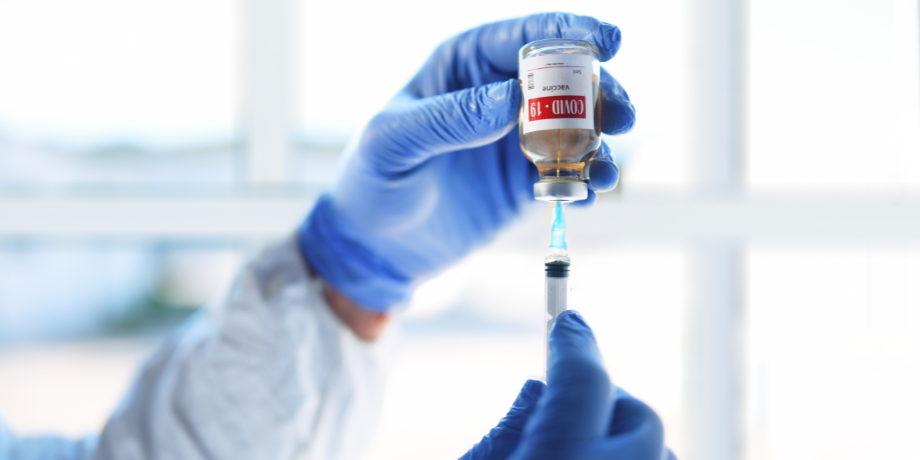
A new article in The Icelandic Medical Journal presents an analysis of selected findings from the study Health and Wellbeing in Iceland. Markus Meckl and Birgir Guðmundsson, professors at the University’s Faculty of Social Sciences, together with Kjartan Ólafsson, specialist, and Stephanie Barillé, project manager, carried out the analysis. The underlying study was conducted in 2022 by the Directorate of Health.
The analysis reveals significant differences in participation in COVID-19 vaccinations based on origin — especially among immigrants from Central and Eastern Europe. Immigrants are defined as those born outside Iceland and with both parents also born abroad.
Until now, little has been known about how vaccination behavior among immigrants in Iceland compares to that of the native population. This analysis maps that picture using data from the fifth wave of the aforementioned study.
Significantly Lower Participation in Certain Groups
When participants were asked whether they had received three doses of the vaccine, in accordance with public health recommendations, only 32% of Polish immigrants and 43% of other Central and Eastern European immigrants reported receiving all doses. In comparison, 73% of native Icelanders had done so.
It is important to understand why this is the case, and the analysis provided several insights. For example, individuals of foreign origin were, in all cases, less likely than those of Icelandic origin to have received three doses — except for participants from other Nordic countries.
It was also found that the likelihood of getting vaccinated increases alongside trust in the Directorate of Health. The analysis examined whether trust in key social institutions, such as the media and the healthcare system as a whole, had an effect; however, the Directorate of Health was the only institution in this category that showed such an influence.
Furthermore, economic situation played a role: those struggling to make ends meet were less likely to be vaccinated. Social engagement also seemed to matter — those who had voted in the most recent parliamentary elections were more likely to have been vaccinated.
The study thus highlights the importance of cultural context. Immigrants often come from countries where trust in public health authorities and vaccinations is low. This affects their perceptions here and their attitudes toward public healthcare services.
Further Research Needed
There are areas where further research would be valuable — for example, participants were not asked directly about their vaccination behavior, nor whether different types of vaccines had an impact, which would be worth exploring. The composition of the sample may also introduce certain biases.
All that said, it is clear that participation in vaccination differs by origin. Further research is needed, especially considering the considerable efforts made to ensure universal access to vaccinations. Information was translated specifically to reach immigrants, and for Polish immigrants, at least, it seems that information flow was partly successful. For example, the data show that 19% of them were never vaccinated.
Targeted and well-structured measures are needed to build trust and improve communication with specific immigrant groups, especially those with a historical distrust of authorities. This cannot be achieved solely through better information flow, but also by increasing social participation and connections. Mapping and understanding vaccination behavior is not only key to successful disease prevention, but also to building a stronger and healthier society.
Full article in Læknablaðið