- Study
- Student
- Research
- About UNAK
- University
- Schools & faculties
- Governance
- Rector
- University Council
- University Assembly
- Laws and regulations
- Organization
- Councils and committees
- Strategies & policies
- On campus
- Human resource
20. August 2026
The Importance of School Leadership in Sparsely Populated Areas
CANDLES Receives DKK 500,000 in Follow-up Funding
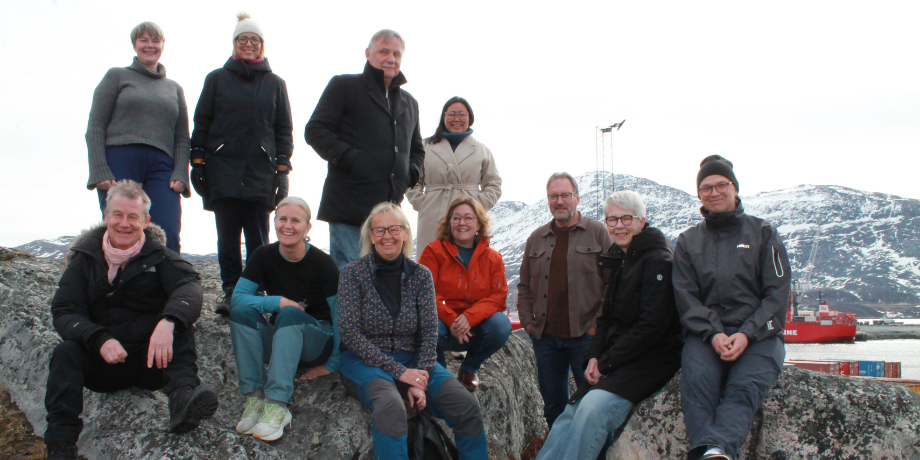
The research project CANDLES: Sustainable Nordic and Arctic Educational Leadership: Collaboration in Times of Opportunities and Challenges has received a follow-up grant of DKK 500,000 from the Nordic Arctic Programme, administered by the Nordic Council of Ministers. The three-year project focuses on school leadership in rural and geographically dispersed communities across the Nordic and Arctic regions.
Sigríður Margrét Sigurðardóttir, Associate Professor and Dean of the Faculty of Education at the University of Akureyri, leads the project on behalf of the international research group NordLead.
“This follow-up funding is invaluable to us, and we are particularly delighted that the project has once again received the maximum grant available. The initial funding enabled us to lay a solid foundation for the collaboration. We can now take the next step and work directly with the school leaders themselves. That is when the project will truly begin to come to life,” says Sigríður Margrét, commonly known as Sigga Magga.
Schools Play a Key Role in Their Communities
The project focuses on compulsory schools in sparsely populated and geographically dispersed communities in Denmark, Finland, Greenland, Iceland, Norway and Sweden. Although circumstances vary between countries, school leaders in many areas face similar challenges. These include population decline, long distances, rapid social change and the need to adapt schools to the culture and needs of each community.
Schools in smaller communities are often much more than places where children receive an education. They can be at the heart of the community, influencing its social cohesion, culture and future. One of the aims of CANDLES is to deepen understanding of how school leaders address challenges and make use of the opportunities presented by the circumstances of their respective communities.
Data collection is based on action research involving collaboration between researchers and school leaders. School leaders examine the challenges and opportunities they encounter in their own work, test approaches to improvement and evaluate the outcomes in partnership with the researchers. In this way, knowledge is generated within the schools themselves and can be put directly into practice.
Workshop at the University in October
The first year of the project has primarily been devoted to developing the research framework and building collaboration among the participating countries. Approximately thirteen researchers have taken part in online workshops, as well as two in-person workshops. The first was held in Aarhus ahead of the Nordic Educational Research Association’s NERA conference in March, while the second took place at the University of Greenland in Nuuk.
The project has also been presented internationally, including at Arctic Frontiers 2026 in Tromsø and NERA 2026.
The new funding will allow data collection to begin in six countries, in collaboration with twelve school leaders—two from each country. In October, the school leaders and the research team will gather for a workshop at the University of Akureyri. The workshop will lay the foundations for the action research, while giving participants an opportunity to share experiences and knowledge across national borders.
In the longer term, the aim is for the findings to benefit both school leaders and education policymakers. Among the project’s outputs will be practical guidelines for sustainable school leadership that take account of the particular circumstances of sparsely populated and geographically dispersed communities across the Nordic and Arctic regions.
Click here to see further information about the CANDLES project